
Teaching Organic Composting in the “Rooting for Change” Project: Sowing the Seeds of Green Living in Schools
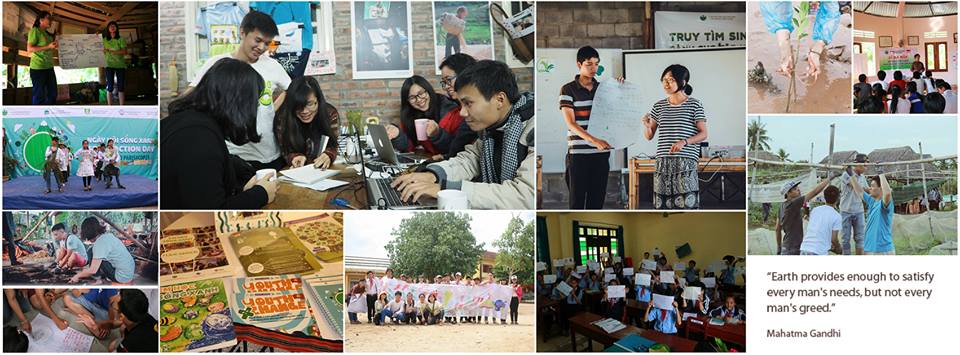
Within the framework of the “Rooting for Change” Project, the C&E Center collaborated with a group of students from the National University of Singapore (NUS) and the Rikolto organization to implement a series of teaching and practical activities on organic composting at junior high schools in Hanoi. The program was held at Nam Trung Yen Junior High School, Yen Hoa Junior High School, and Truong Cong Giai Junior High School, with the active participation of the school principals and teachers.

The activity not only provided knowledge about sorting organic waste but also allowed students to directly practice composting, thereby fostering a green mindset and environmental awareness in their daily lives.
Learning to Sort Organic Waste: The Foundation of Composting
Before starting the practical session, students were introduced to the concept of sorting waste into two groups, “Green” and “Brown”—important knowledge that determines the quality of compost:
- “Green” waste: rich in nitrogen and moisture, such as vegetable peels and leftover food from plants.
- “Brown” waste: rich in carbon, such as dry leaves, branches, scrap paper, and eggshells.

Through guidance from NUS students, the students understood that a balanced mix of the two waste groups helps the decomposition process to be more efficient, reduces odor, and creates a high-quality source of organic fertilizer. They also learned that chopping organic waste before composting is like chewing food—helping the fermentation process to happen faster and more smoothly.

They asked innocent but thought-provoking questions such as, “Why are eggshells in the Brown group?” or “If every family composted, how much would the amount of landfill waste be reduced?” This opened up a lively dialogue space, transforming knowledge from a dry subject into a true journey of discovery.
Practical Composting: Learning Through Experience
The highlight of the program was the practical activity of composting in small groups. Under step-by-step guidance, students directly:
- Chop up vegetable peels
- Crush eggshells
- Process leaves and dry branches
- Mix ingredients in appropriate proportions
- Put them into compost bins

The classroom atmosphere became lively as the students worked, exchanged ideas, and shared their perspectives. At Nam Trung Yen Secondary School, the school garden was transformed into an outdoor experiential learning space, where concepts like recycling, sustainable development, and the food life cycle became more accessible and understandable.

Through this activity, students realized that kitchen waste is not just something to be thrown away, but can be used to nourish plants, closing the natural cycle.
Environmental Education Connected with International Inspiration
Beyond just technical knowledge about composting, the program also serves as a bridge for cultural and academic exchange. NUS students share environmental initiatives in Singapore, learning experiences, and scholarship opportunities, thereby broadening the horizons of Vietnamese students.

The support of school teachers ensures that the lesson content is closely connected to the main curriculum and practical school life. Every space – from classrooms to libraries – can become a place to sow the seeds of a green lifestyle with the right methods.
Through a series of activities under the “Rooting for Change” Project, the C&E Center and its partners believe that environmental education needs to begin with practical experience. When students understand, practice, and ask their own questions, they not only master the knowledge of composting but also gradually develop the habit of waste sorting and a sustainable development mindset.

From seemingly discarded vegetable peels, dried leaves, and eggshells, “green seeds” of awareness have been sown. And it is from the school that the journey of creating change for the environment is quietly beginning – persistent, positive, and full of hope. 🌱