
GROWING GREEN IN THE SCHOOLYARD: HANOI AND NUS STUDENTS ON THE CIRCULAR FOOD JOURNEY
“After this session, I think I can make my own compost to help the plants around my home grow better.” — Trung, Grade 6, Truong Cong Giai Secondary School
A vegetable peel. A handful of dry leaves. For students at three secondary schools in Hanoi, namely Yen Hoa, Nam Trung Yen and Truong Cong Giai, these everyday scraps became the starting point for a much bigger lesson: how food, waste and the environment are all connected.
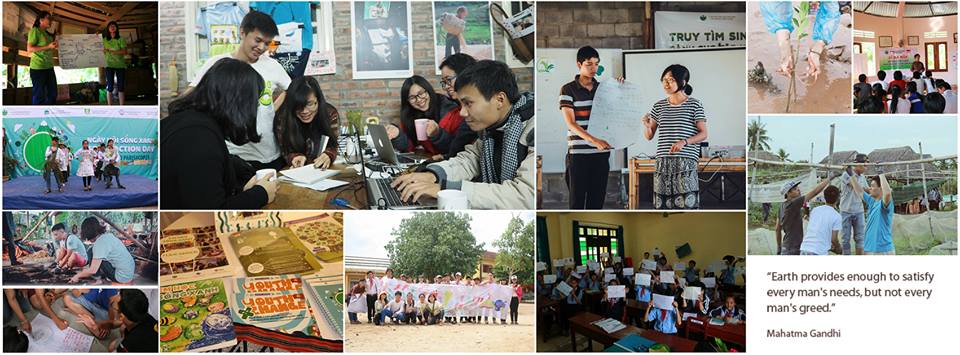
This was the spirit of “Rooting for Change,” a series of exchange and hands-on learning activities held on 4–5 August 2026, bringing together students from the three schools with a group from the National University of Singapore (NUS), organised with Centre for Development of CommunityInitiative and Environment (C&E) and sponsor by Rikolto, under the GoodFood@School project.
 |  |
A partnership that grew over three years
The collaboration between NUS and Hanoi schools began in 2024, when NUS partnered with Rikolto to study school food systems in Vietnam. In 2025, a first NUS student group led by supervisor Jerome KOK ran nutrition-focused exchanges at Yen Hoa and Nam Trung Yen. In 2026, the partnership expanded into organic composting lessons, games and hands-on practice designed for Vietnamese students, with active support from teachers and school leaders at all three schools.
The journey started with simple questions such as “What do you usually have for breakfast?”, “What happens to food after we use it?”, which helps students connect what’s on their plate to the world around them. By January 2026, students were already learning the basics of composting at Nam Trung Yen, they practised in the school garden, sorting scraps and layering them into a compost bin, beginning to see a small circular system take shape right on campus.
 |  |
 |  |
Learning through play
Rather than starting with theory, the August sessions introduced composting through card games and interactive activities, in which students study how to distinguish “green” and “brown” materials, understand each one’s role, and learn the basic steps of building a compost bin. Working in English with the NUS students also gave students a chance to practise communication and teamwork alongside environmental knowledge.
 |  |
When “waste” becomes a resource
Students then made compost themselves, sorting and cutting vegetable peels, dry leaves and branches collected from the school grounds, layering them as “green” and “brown” materials under the guidance of NUS lecturers, students and their own teachers.
“I especially liked using leftover vegetable and fruit peels to make fertiliser for plants. From now on, I will collect leftover vegetables and fruit and other organic waste to make fertiliser.” — Quang, Grade 9, Yen Hoa Secondary School
Ms Le Ha, homeroom teacher of Class 9A8 at Yen Hoa and part of the GoodFood@School project for five years, reflected on the impact:
“What impressed me most was how enthusiastic and proactive the students were. When they learn through hands-on experience, knowledge becomes more accessible, easier to understand and more memorable. I believe activities like this help students develop an awareness of environmental protection and encourage them to change small habits in their daily lives.”
 |  |
From “eating right” to “living green”
Alongside the composting sessions, Yen Hoa Secondary School also held “A Little Summer Kitchen – Exploring Safe and Healthy Food” on 5 August, covering balanced nutrition, the four essential food groups, and food safety through games, quizzes and a “MasterChef Junior” experience.
Together, the two activities trace one continuous story: from how food is chosen and prepared, to how leftovers are returned to the soil. A peel that is not wasted. A handful of leaves sorted correctly. A compost bin tended together. A green shoot is growing. A lesson passed on to family and friends. Small, repeated actions can grow into new habits, and spread from schools to families and communities.
 |  |
This small story from those activities in the Hanoi schoolyard is proof of something bigger: sustainable change doesn’t have to start with grand plans. It can start with a vegetable peel, a handful of dry leaves, or one small daily habit. Join us in supporting and sharing journeys like “Rooting for Change,” so that more generations of students can grow up with sustainable food education — for a greener future, together.